Hebei Yunrui Chemical Equipment Co., LtdGeneral contractor of industrial evaporation, crystallization,
drying and tower.
 中文(簡體)
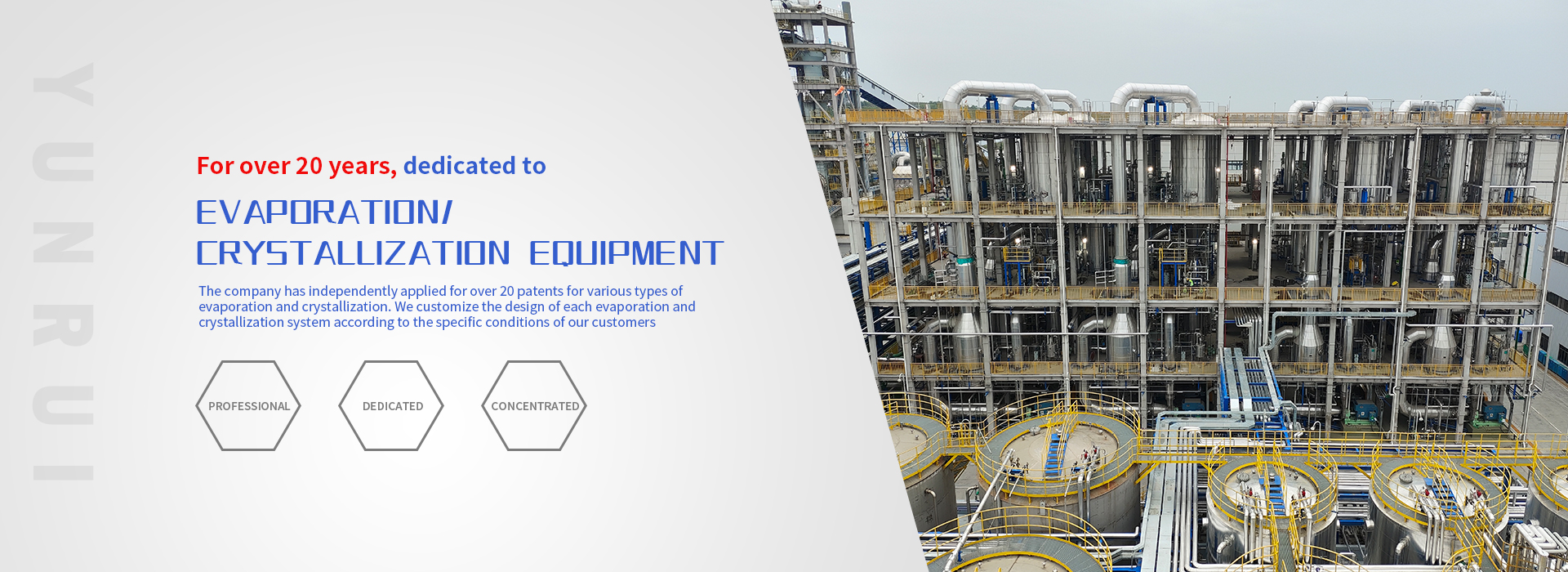
In industrial refrigeration and air conditioning systems, evaporators and condensers are key components. They undertake the task of heat exchange and material state changes, providing the foundation for cooling or heating. This article will delve into the similarities and differences between these two components to help industry professionals make more informed choices and designs.
The main function of an evaporator is to evaporate the refrigerant flowing through it at low pressure and low temperature, thereby absorbing the surrounding heat. Typically, evaporators are composed of pipes, fins, and shells, which work together to enhance the efficiency of heat exchange.
In the evaporator, the liquid refrigerant enters and absorbs the surrounding heat through heat conduction in the pipeline, thereby converting into a gaseous state. This process not only meets the cooling needs, but also provides a cooling effect for the environment. Therefore, evaporators play a very important role in refrigeration systems.
The main function of the condenser is to cool the gaseous refrigerant returning from the evaporator, transforming it back into a liquid state. Inside the condenser, the gaseous refrigerant first flows in and transfers heat to the cooling medium (such as air or water) through heat exchange, ultimately completing the liquefaction process.
The condenser is usually composed of radiators, pipes, and shells, aiming to improve the efficiency of condensation. Due to the heat exchange function of the condenser, it ensures the operational efficiency of the entire refrigeration cycle.